ByDr. Fahad Abbasi
Technical review by:Dr. Christopher Morgan
“Get aside… move… move… Dr. Sahiba (female health worker) has arrived! Bring water… spread the mat… call the other women!”
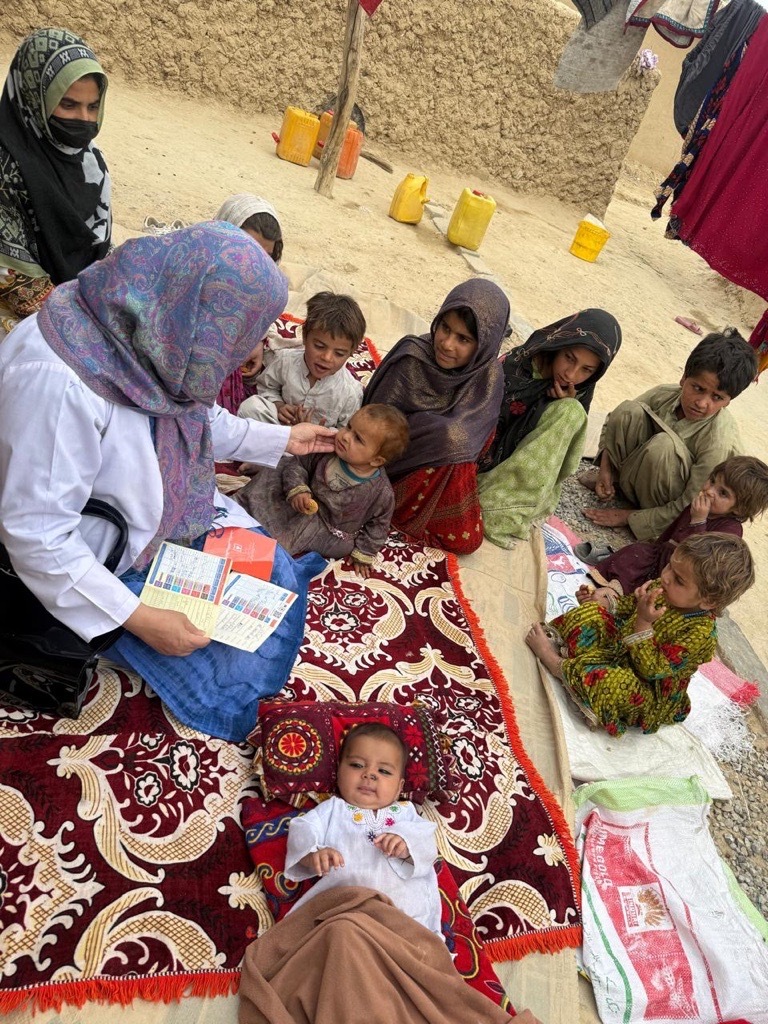
The voices echo through a narrow neighborhood street in Quetta, Balochistan. Inside a joint-family compound, excitement spreads quickly. Women gather in the courtyard, adjusting their shawls, bringing their children forward, whispering to one another.
“A lady doctor has come to our home.”
Some rush to call other women from nearby houses. Others quickly pull out their children’s health cards.
The woman they are welcoming so warmly is Dr. Shazia Niazi, provincial coordinator for Jhpiego Pakistan. She is a trained medical doctor specializing in obstetrics, gynecology, and public health.
In official settings, Dr. Shazia often sits across the table from senior government officials for the Expanded Programme on Immunization (EPI) on behalf of a Jhpiego project that works closely with Pakistan’s provincial government to improve routine immunization outcomes. As a coordinator, Dr. Shazia participates in high-level technical meetings, coordinates with provincial health authorities, and represents Jhpiego in policy discussions.
But her work does not end in boardrooms.
Much of it happens inside homes, in courtyards, and among families who rarely meet a doctor face-to-face.

Dr. Shazia often serves as the vital connection between community and government. During the COVID-19 vaccine rollout, she served as a provincial quality monitor for a Gavi-funded project for Jhpiego. She regularly visited vaccination centers across Balochistan, monitoring vaccine storage in ice-lined refrigerators, checking expiration dates, ensuring adherence to safety protocols, and supporting vaccinators.
Every evening during the COVID-19 rollout, she shared her observations from the day in the community—whether about vaccine hesitancy or adverse events following immunization—with the provincial EPI team to improve the process.
Today, her focus is shifting toward another important milestone. Balochistan plans to introduce the HPV vaccine for adolescent girls by 2027, and the groundwork is already underway. Dr. Shazia engages health professionals, policymakers, and community leaders to build awareness and support for the vaccine. In addition to speaking about HPV and advocating for its importance, she also engages communities on routine immunization and vaccination.

Because of her work and her medical practice, Dr. Shazia has become a familiar and trusted figure across the province.
On this particular day, she came to a neighborhood in Quetta simply to check the immunization status of children.
One by one, mothers approached her eagerly, holding up their children’s EPI cards for review. These cards are crucial because they record a child’s routine vaccinations from birth to 15 months, protecting them from vaccine-preventable diseases.
“Doctor Sahiba, please check this,” one mother says. “Mine also… look at my child’s card,” another mother adds.
Just a month earlier, this same compound had several children who had missed routine vaccines, especially measles and pentavalent-3, a vaccine that protects young children from five serious diseases, preventing illness and death.
Many families had also misplaced their EPI cards.
Today, the scene is different. As Dr. Shazia flips through the cards, a smile appears on her face. Most of the children have now received their scheduled doses, and some are close to completing their immunization.
What changed?
When she visited last month, many families had not realized how important immunizations were. But after their conversations with Dr. Shazia, they understood. Today they came prepared.
Working in this community requires navigating deeply rooted social norms.
“In this society, patriarchy is strong,” said Dr. Shazia. “But at the same time, cultural respect also opens doors. Because I am a female doctor, many men here treat me like a sister. They listen.”
That trust makes a big difference.
“When I speak to the men about their children’s health, they take it seriously,” Dr. Shazia said. “And when they agree, the message reaches the women as well.”

Her relationship with the community goes beyond official visits. Many families know her from her clinical practice, and those interactions often become opportunities to talk about maternal health, child health, and immunization.
The community often assumes she has come to provide treatment.
“They thought I came to run a home-based clinic today,” she said with a smile. “But actually, I came to talk about vaccines.”
Community outreach of this kind is usually conducted by social mobilizers or polio workers—people who sometimes face resistance, including community hesitancy, cultural and religious misconceptions, and rumors about vaccine safety. Remote locations, security challenges, and limited resources make reaching children even harder. These barriers affect routine immunization coverage. But a doctor walking into the same neighborhood receives a different welcome. “They invite me into their homes,” Dr. Shazia said. “They offer tea. They spread a mat for me to sit. And while we talk about health, the women also share their everyday concerns.”
In those quiet conversations in courtyards, over tea, trust is built. And trust in public health often saves lives. Women like Dr. Shazia Niazi are more than doctors. They are bridges between health systems and communities, breaking cultural barriers through dialogue, respect, and persistence.
Dr. Shazia is helping ensure that children are protected, families are informed, and communities are healthier than they were yesterday.
Dr. Fahad Abbasi is a Technical Advisor for Jhpiego's Pakistan Office.
Dr. Christopher Morgan is Jhpiego's Technical Director for Immunization.