ByMohamed Dauda Kamara
Technical review byLaura Fitzgerald
At Lungi Government Hospital, a shift in how maternity care is delivered is helping more women give birth safely.
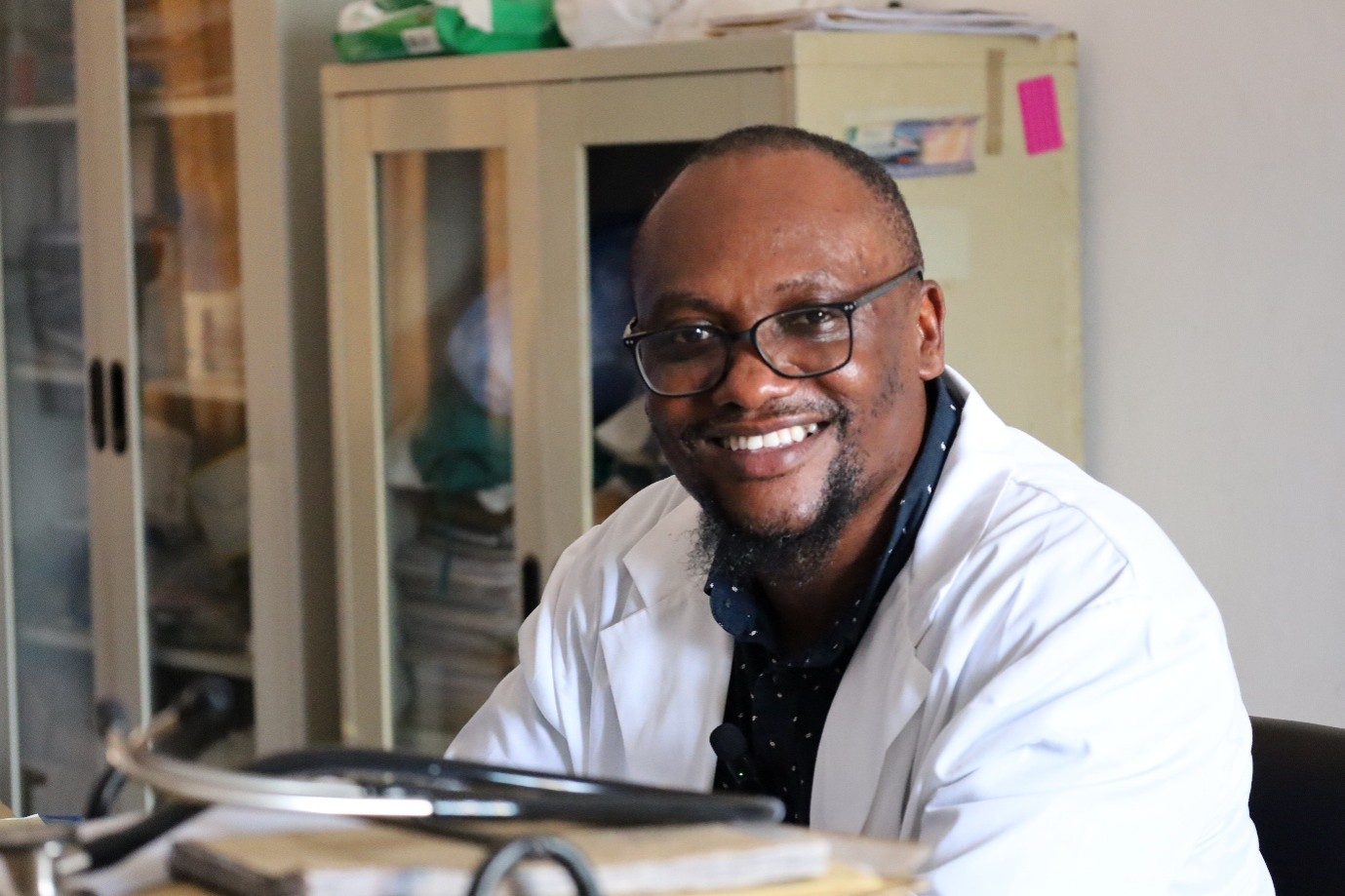
Established in 1954, Lungi Government Hospital serves the coastal town of Lungi and surrounding communities in Sierra Leone's lower Port Loko region. The facility provides essential medical and emergency services and conducts more than 80 deliveries each month.
For nearly a decade, Dr. Alusine Yillah, the hospital's medical superintendent, spent much of his day in the operating room, responding to patients who needed cesarean sections.
"Most times, we were blind to what was happening in the maternity ward because we just cared about performing cesarean sections," said Dr. Yillah. "We were always in the operating room."
As a result, there was limited coordination and shared decision-making between Dr. Yillah and the midwives in the maternity ward.
The maternity ward relied on a partograph to monitor labor progress. While useful, the tool focused heavily on cervical dilation and offered limited guidance on other aspects of maternal and fetal well-being. As a result, health care workers sometimes missed early warning signs of complications and found themselves responding to emergencies rather than preventing them.
That began to change in November 2025, when Dr. Yillah participated in a six-day national maternal and newborn health training for doctors, organized by the U.S. Department of State-funded MOMENTUM Country and Global Leadership project. Through practical sessions on obstetric emergency management and essential newborn care, Dr. Yillah and 16 other doctors strengthened their skills in managing labor, responding to obstetric emergencies, and providing quality care for newborns.
As part of the training, they were introduced to the Labor Care Guide, an updated tool recommended by the World Health Organization. Building on the traditional partograph, the Labor Care Guide helps skilled birth attendants monitor labor, recognize potential complications, and coordinate care around the needs of each mother and newborn.
"I find the use of the Labor Care Guide brings quality to delivery,” said Dr. Yillah. “It enhances team coordination and brings everyone together.”
The training also reinforced the importance of coordinated care during labor, clearly defined responsibilities among health care providers, early recognition of complications, and respectful maternity care—all essential to safer deliveries for mothers and their newborns.
After the training, Dr. Yillah returned to Lungi Government Hospital and championed the introduction and adoption of the Labor Care Guide. He worked closely with midwives, nurses, and clinicians through mentorship and on-the-job coaching to support its effective use.
“The training improved my knowledge not only in conducting deliveries but also in properly managing obstetric emergencies," Dr. Yillah said. "It has changed how we support women during labor and helped us make better clinical decisions."
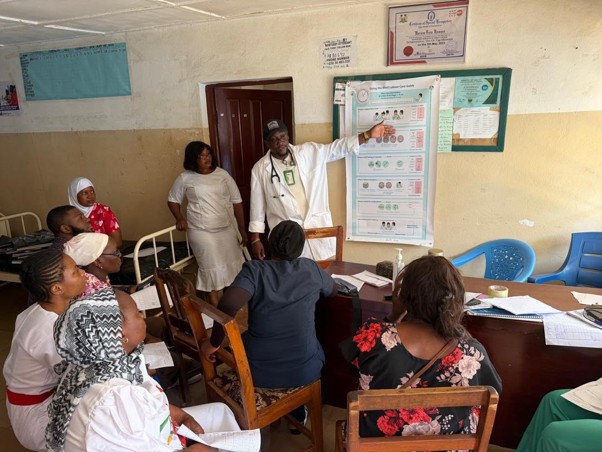
Today, Dr. Yillah and his fellow surgeons are more actively involved in the maternity ward. Rather than waiting in the operating room to respond to emergencies, they work alongside midwives and other health care providers to monitor labor progress and support clinical decision-making.
The team meets regularly to discuss challenges and opportunities for improvement. Weekly maternal and newborn health mentorship sessions have strengthened providers' ability to recognize complications early and respond appropriately. Through the Labor Care Guide and clearly defined roles and responsibilities, the team is improving coordination and ensuring women receive timely, appropriate care throughout labor and delivery.
With stronger provider capacity and routine use of the Labor Care Guide, the cesarean section rate fell from 47.5 percent to 25.9 percent between January and August 2026, while spontaneous vaginal deliveries increased from 52.5 percent to 74.1 percent. These improvements in clinical decision-making and labor management came even as the number of deliveries increased from 611 to 718.
The hospital also demonstrated improvements in newborn outcomes. Live births increased from 184 in early 2025 to 493 in the Spring of 2026, while the stillbirth rate declined from 6 percent to 3 percent.
With support from the MOMENTUM Country and Global Leadership project, the Lungi Government Hospital is demonstrating the power of investments in health worker capacity building and proven clinical tools in improving maternal and newborn care. Frontline health workers like Dr. Yillah are gaining the lifesaving skills, confidence, and leadership needed to deliver safer, higher-quality maternal and newborn health services and support Sierra Leone's efforts to reduce preventable maternal and newborn deaths.
--
Implemented by Jhpiego, the MOMENTUM Country and Global Leadership project is funded by the U.S. Department of State. It works with Sierra Leone's Ministry of Health and other national and district partners to strengthen health systems and improve maternal, newborn, and child health and nutrition outcomes.
Between October 2025 and September 2026, the project reached 209,254 women, newborns, and children with improved, lifesaving services across supported facilities in Bo, Koinadugu, Pujehun, Port Loko, and Karene districts. During this period, 38,390 women were protected from life-threatening pregnancy and childbirth complications, and 38,348 newborns were saved from life-threatening conditions.
Mohamed Dauda Kamara is a Communications Knowledge Management Officer for Jhpiego Sierra Leone. Laura Fitzgerald is a Principal Technical Advisor for the MOMENTUM Country and Global Leadership project.