“It’s not an innovation just because it’s new. It’s an innovation because it’s better.”
At Jhpiego, innovation is in our DNA. It is part of how we work with governments, health workers, and communities in 38 countries. We spoke with Joanne Peter, who leads Jhpiego’s innovation work. Her passion for innovation stems from something she learned early in her career from a mentor, who said there are only two ways to improve the human condition: through technology and through behavior change. Over the course of her career, Joanne has seen this principle at work with frontline health workers, at Google and J&J, with governments, and with small innovators. Her mission, she says, is to bring discipline to the practice of innovation and build trust among all these actors.
Joanne speaks with us about how she is shaping her vision through Jhpiego’s approach to selecting, testing, and scaling innovations that work in the real world.
Indrani Kashyap (IK):Everyone talks about innovation. What does Jhpiego actually call an innovation?
Joanne Peter(JP): Innovation can take many forms. It can be a product, a process, a business model, or a partnership. Just as important, it has to be meaningfully better than what was there before, for patients and for the health system. You don’t know whether it’s better unless you rigorously test it against the usual way of doing things. So testing has to be built in.
Shaping the Innovations Agenda
IK:How does Jhpiego help governments decide which problems to prioritize?
JP: Something that the innovation community has learned very clearly over the last several years is that if you focus only on the supply side of innovation but neglect the demand side, you really struggle to bring those innovations to scale. So we’re flipping it on its head. We conduct in-depth analyses with governments to understand the most persistent problems and their root causes in service delivery and product spaces. Those then become entry points for innovation.
Governments aren't just being peppered with “adopt this, adopt that.” When a government clearly names a problem, commits staff and budget, and identifies health facilities for testing solutions, the conversation with innovators becomes much more fruitful.
IK: Can you give some examples of what this looks like in practice?
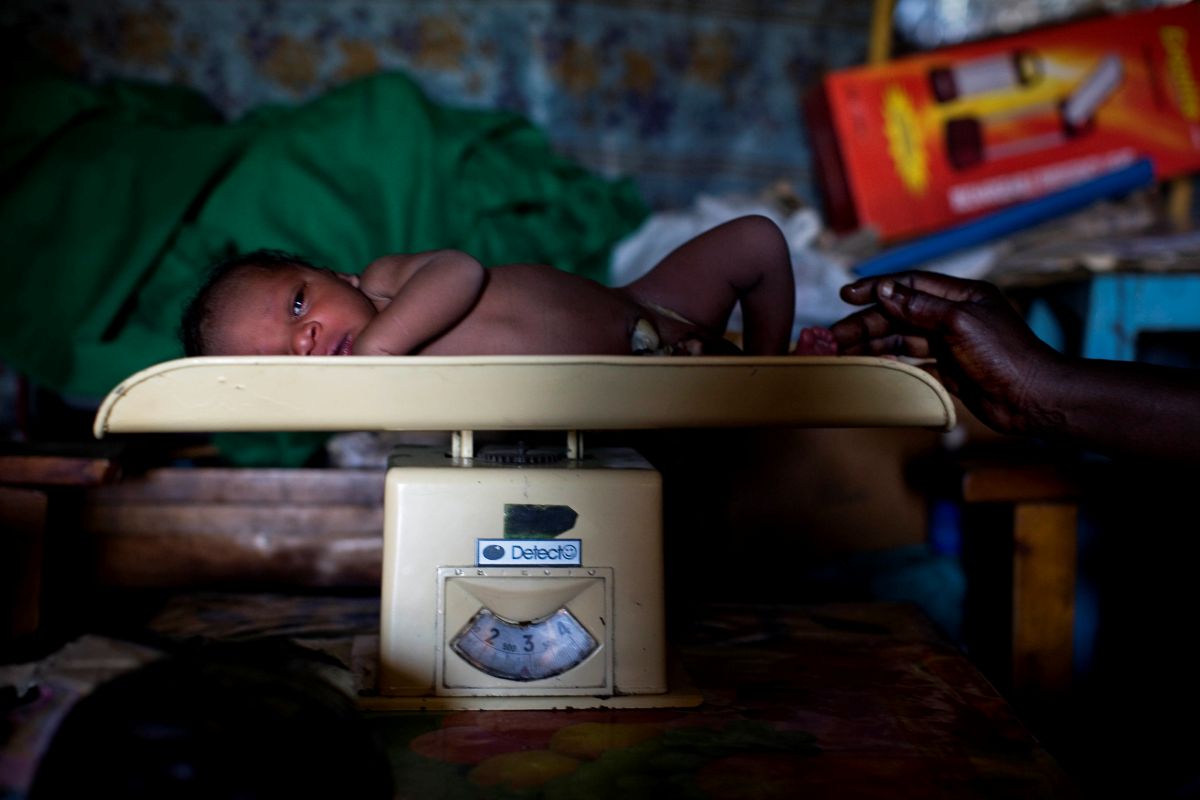
JP: The Healthy Birth Initiative is an excellent example. We started in Nakuru County, Kenya, where 70,000 babies are born every year, with in-depth conversations about low birth weight and newborn deaths. We then looked at which innovations had the strongest evidence, the best track record in Kenya, and the greatest value for money, and helped the county decide what to pursue.
The Africa Health Security Accelerator takes the same approach to health security, bringing together governments, innovators, researchers, investors, and private-sector actors in co-design platforms that foster partnership, problem-solving, and shared learning across Africa.
IK:How do you test innovative solutions that can reach anyone, anywhere?
JP: We are working to test promising new solutions and build their evidence base, particularly in areas we believe are especially transformative or urgent. For example, we’re excited about the potential of generative AI, but we want to ensure that it can add value at the last mile.
That’s why we’re testing a solution with Viamo that allows people to call a toll-free number from a basic feature phone or even a landline, ask a question in their own language, and hear the answer in that same language. This removes the barriers of smartphone ownership, internet access, and literacy. In Mozambique, we’re seeing many questions about health-related topics, and the answers people receive have been very useful, bringing them back to the service.
Working with health workers has long been part of Jhpiego’s identity. Generative AI offers many opportunities in this area as well, and we have been curating a regular newsletter on how AI is transforming health worker learning and performance. Through our Beyond the Algorithm series, we are working with the World Health Organization to build the evidence and guidance needed to support digital health and AI adoption across the WHO South-East Asia Region.
Innovations and disruptive solutions aren't limited to technology; they can also take the form of new service delivery models. We’ve seen how pharmacy-based pre-exposure prophylaxis works as a channel for HIV prevention, and similarly, ePharmacy is being used successfully to increase access to family planning. We are also tracking antimicrobial resistance as a looming threat and supporting innovators through The Trinity Challenge.
Creating the Conditions for Adoption and Scale
IK:How does an innovation become part of practice? How do we ensure scale?
JP: If you think about the innovation continuum, it goes from idea to early prototype or proof of concept, piloting, building the evidence base, and eventually transitioning to scale. Often, innovation practices focus heavily on the early stages. There's a lot of emphasis on the beginning of the process, but less on the transition to scale. As a result, we often see a persistent pilot-to-scale gap.
We think it's critical to keep scale in mind throughout the innovation continuum. We've done a lot of work to help move innovations with robust evidence bases into public systems. Through AMPLI-PPHI, for example, we have successfully advocated with the government of Kenya, presenting evidence on the use of heat-stable carbetocin and calibrated drapes to prevent and manage postpartum hemorrhage, a leading cause of maternal deaths worldwide.
The Kenyan government has committed US$7.8 million to this initiative, providing a strong example of an innovation moving toward scale. Through SUCCESS, we're working to scale community-level HPV self-sampling. These initiatives demonstrate our commitment to supporting innovations throughout the journey from testing to scale.
IK:What challenges do you see for innovators trying to scale in today's environment?
JP: Changes in the funding landscape are driving two big shifts. First, governments are in the driver's seat in ways they weren't before, acting as purchasers of innovations. Second, with less grant funding available, innovators need more market-based models, including more varied revenue streams and customers. Sometimes this means offering a commercial product or service in one area to subsidize another.
The hardest part is the business-to-government relationship. That's where the biggest opportunity lies for reaching people who cannot afford to pay for services themselves. But very few innovators have government contracts, and those who do still find them risky. Governments, meanwhile, have received so much technology through donations in the past that they've never really had to buy it. They don't necessarily know how to buy it well, and innovators don't really know how to present their solutions to governments in ways that make them easy to procure.
That's the nut we're trying to crack through The HealthTech Hub Africa and across our innovation work. We're helping governments become strategic buyers of innovation from their local ecosystems and helping local innovators prepare to deliver at scale in the public sector.
The Jhpiego Difference
IK:Every organization talks about innovation. What makes Jhpiego different?
JP: Three things. First, we've been implementers inside public health systems for decades and have deep, trusted relationships with governments. That lets us translate between how governments think and talk and how innovators do. Second, working in nearly 40 countries enables faster learning cycles. Third, we're committed to local innovators and help build their capacity through our work, including WISH and the HealthTech Hub Africa. It's by no means about Jhpiego alone.
Indrani Kashyap is the Associate Director for Regional Communications at Jhpiego.
Every dollar makes a difference. A gift of $10 can equip a delivery room, $30 can protect a newborn through routine immunizations, and $48 can provide a mother-to-be with four critical prenatal visits.